Do galvanized steel sheet supplier in USA offer mill test reports traceable to individual coils
Yes—reputable galvanized steel sheet suppliers in the USA do offer mill test reports (MTRs) traceable to individual coils, but *only if explicitly required by specification, contract, or project QA/QC protocol*. This is not a default practice. It is a conditional, documentation-intensive capability—not a universal service.
For quality assurance and safety managers reviewing U.S.-based suppliers, the critical distinction lies not in whether MTRs are provided, but in *what level of traceability they actually deliver*. A generic MTR citing “ASTM A653/A792, Grade G90, Zinc Coating 0.90 oz/ft²” with batch number only satisfies basic compliance—but fails audit requirements for structural applications where coil-level accountability is non-negotiable.
Traceability to the individual coil means each MTR must include:
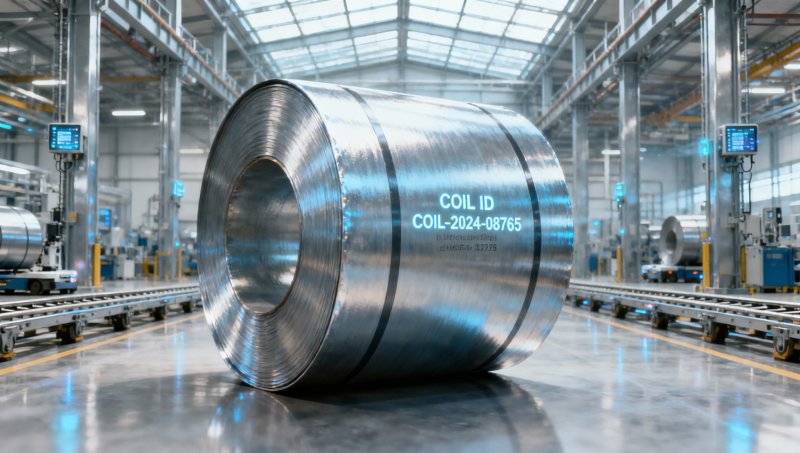
- Unique coil ID (e.g., “COIL-2024-08765”) tied to the physical marking on the coil;
- Heat number *and* cast number from the original slab production;
- Rolling mill log reference (e.g., “Mill Line 3, Shift B, Date 2024-03-12”);
- Full chemical composition (including residual elements like Sn, Sb, As, Pb—critical for galvanizing reactivity);
- Tensile strength, yield strength, elongation, and bend test results *per coil*, not averaged across a heat;
- Zinc coating weight measured at three locations per coil—not just one sample per lot.
This level of granularity is mandated under ASTM A653/A792 Annex A1 (for coil-specific reporting), ISO 10474 (steel product certification), and commonly enforced in U.S. Department of Defense, DOT bridge, and ASCE 7-compliant building projects. Yet many domestic suppliers—particularly those serving commodity sheet markets—issue consolidated MTRs covering multiple coils per heat. Their systems track by heat, not coil. That’s technically compliant for general fabrication, but insufficient when material failure could trigger liability exposure in load-bearing or fire-rated assemblies.
The gap widens further when third-party verification enters the picture. While ASTM A653 allows supplier-issued MTRs, projects governed by AWS D1.3 (Structural Welding Code – Sheet Steel) or AISC 360 require independent validation of traceability. In such cases, the MTR must be accompanied by a certified lab report referencing the same coil ID—and that lab must be accredited to ISO/IEC 17025. Few U.S. galvanizers maintain this dual-chain documentation routinely; most reserve it for prequalified contractors or high-value government bids.
Another operational constraint: coil-level traceability requires full integration between casting, hot rolling, cold rolling, and galvanizing lines. If the galvanizer purchases base steel from a separate mill (a common model), they inherit whatever traceability the upstream supplier provides—and often cannot retroactively assign coil IDs without re-spooling or re-labeling. That introduces manual handling risk and potential breakage in the chain. Suppliers who own integrated facilities—like Nucor, Steel Dynamics, or certain regional specialty mills—are more likely to support true coil-level MTRs, but even then, the service is typically opt-in and incurs documentation surcharges (often $75–$150 per coil).
From a procurement standpoint, assuming traceability exists unless specified otherwise is a high-risk oversight. Purchase orders must explicitly state:
- “MTRs shall reference individual coil ID as marked on packaging”;
- “Chemical analysis and mechanical test data shall be reported per coil, not per heat”;
- “Zinc coating weight shall be measured at three locations per coil and reported individually”;
- “MTRs shall be issued prior to shipment and digitally signed with timestamped audit trail.”
Without these clauses, suppliers have no contractual obligation to provide coil-level data—even if their ERP system technically supports it. And once material arrives on-site, retroactive traceability is impossible: coils are cut, slit, or recoiled, erasing original identifiers.
This is where international supply dynamics become operationally relevant. Some China-based structural steel manufacturers—including Hongteng Fengda—have built traceability into their core QA infrastructure specifically to meet North American project demands. Their MTRs embed coil-level data directly from cold rolling and continuous galvanizing lines, with full alignment to ASTM, EN 10346, and ISO 9001:2015 audit trails. Unlike fragmented U.S. supply chains, their vertically integrated process—from billet casting through final coating—allows unbroken digital tracking from heat to coil to shipment. Each Z-beam order, for example, ships with MTRs that cross-reference coil ID, galvanizing bath temperature logs, and post-coating thickness mapping—data routinely accepted by U.S. engineering firms during submittal review.
That doesn’t imply superiority—it reflects different market positioning. U.S. suppliers prioritize speed, local logistics, and broad-spec flexibility; Asian exporters serving export-driven structural markets invest in granular documentation because their competitive leverage depends on audit readiness, not just delivery time. For QA/safety professionals, the takeaway isn’t vendor nationality—it’s verification discipline. Demand coil-level MTR language *before* PO issuance. Confirm it’s enforceable in the supplier’s terms. Validate sample reports *before* awarding contracts. And treat “MTR provided” as a starting point—not a pass/fail checkpoint.
 Finally, avoid conflating traceability with certification. CE marking, ISO 9001 registration, or even third-party inspection (e.g., SGS or Bureau Veritas) does not guarantee coil-level MTRs. Those certifications cover process control—not data granularity. A supplier can be fully certified and still issue heat-level MTRs unless contractually bound otherwise. The deciding factor remains contractual specificity—not accreditation status.
In summary: yes, coil-traceable MTRs exist among U.S. galvanized steel sheet suppliers—but only for clients who know to ask, specify, and verify. For safety-critical applications, assuming availability is equivalent to assuming structural redundancy: both are design assumptions that require explicit validation, not default assumptions.
Please give us a message


Please enter what you want to find