Introduction
Installation errors with galvanized steel channels can compromise structural integrity, safety, and long-term performance. Understanding the most common issues—from improper alignment and fastener selection to corrosion prevention—is essential for builders, engineers, and procurement teams. This article outlines practical solutions and expert tips to help you avoid costly installation mistakes and ensure reliable results, drawing on Hongteng Fengda’s experience as a trusted structural steel manufacturer and exporter.
Definition and Role of Galvanized Steel Channel
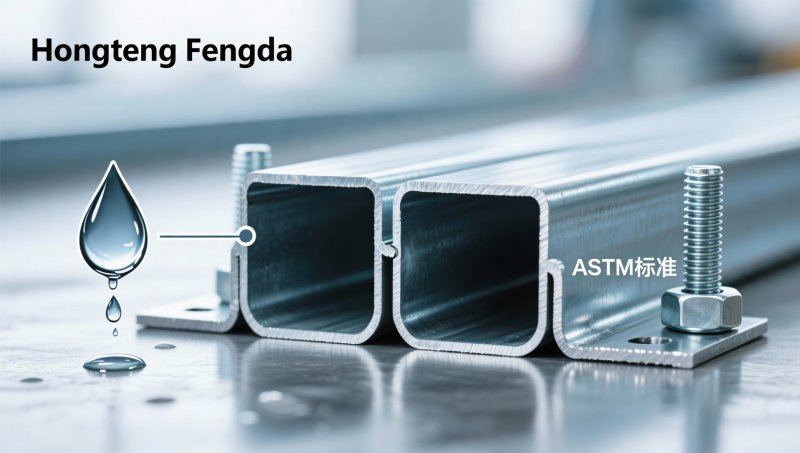
A galvanized steel channel is a key structural element used in construction, automotive manufacturing, and industrial frameworks. It features a U-shaped cross-section providing excellent strength-to-weight ratio and rigidity. The galvanization process coats the surface with a protective zinc layer, enhancing corrosion resistance in humid or chemical-rich environments. When produced by a qualified manufacturer such as Hongteng Fengda, each piece undergoes precise rolling and strict coating control to comply with ASTM, EN, and GB standards. Typical variants include hot-dip galvanized and hot-blown galvanized finishes, both suitable for load-bearing and framing applications. Common materials include Q195, Q235B, Q345B, Duplex Stainless, and 201/304/316 grades. Dimensions typically range from thicknesses of 1.5 to 25mm, heights of 80 to 160mm, and lengths up to 12m, with fine tolerances ensuring consistent performance. However, despite the inherent quality, improper handling during installation—such as incorrect load alignment or inadequate joint preparation—can negate the benefits of galvanization. These issues not only reduce mechanical stability but can also accelerate localized corrosion. Understanding the correct installation procedures is therefore critical for project sustainability, safety, and compliance with engineering specifications.
Common Installation Issues
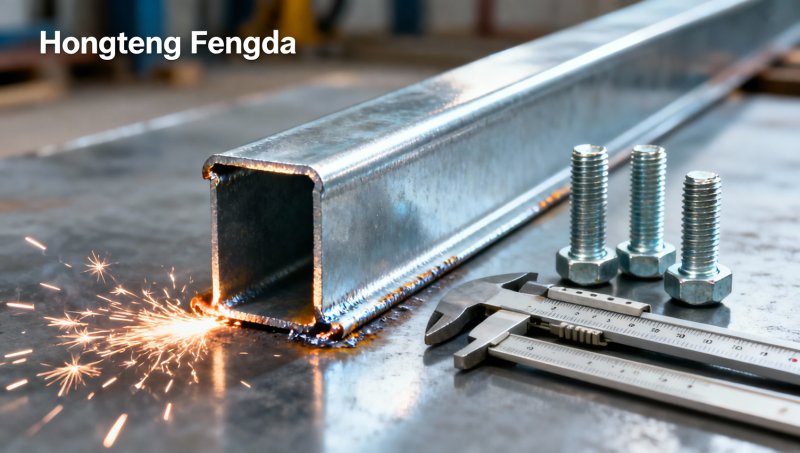
Field installation of galvanized steel channels often encounters several predictable challenges. First, misalignment is one of the primary problems. When channels are not properly leveled or spaced, the load path becomes uneven, creating stress concentrations and potential deformation over time. Second, the use of incompatible fasteners, such as uncoated bolts or lower-grade screws, can trigger galvanic corrosion—especially in humid environments. Third, improper cutting or drilling without edge protection exposes bare steel, leading to rust initiation even on otherwise well-galvanized materials. Fourth, contractors sometimes fail to consider expansion gaps in long runs, causing warping under thermal variation. Another issue is contamination by cement splatter or chemical agents during site work, which can weaken the protective zinc layer. Lastly, insufficient inspection or lack of protective touch-up after welding can cause premature deterioration. Each of these errors stems from a mix of technical misunderstanding, lack of standard adherence, or time pressure during assembly. For procurement officers and safety managers, recognizing the root causes helps set clearer installation protocols and supplier requirements.
Market Overview and Application Scenarios
Globally, the galvanized steel channel market is driven by the growth of construction, infrastructure upgrades, and industrial fabrication. Data from international reports suggest the demand for structural channels is increasing steadily due to factors like urban renewal and renewable energy projects. In construction, these channels function as wall beams, roof purlins, supports, and reinforcement frames. In the automobile manufacturing sector, they provide chassis support and protective framework due to their anti-corrosive surface. Industrial facilities employ them as brackets, columns, or beam components for mechanical systems. The Channel In Steel supplied by Hongteng Fengda serves all these purposes, ensuring reliable performance in demanding conditions. Engineers prefer galvanized options for cost-effectiveness compared with stainless steel while retaining strong corrosion resistance. In emerging markets across Southeast Asia and the Middle East, consistent supply from Chinese manufacturers like Hongteng Fengda supports rapid construction cycles and cost control. The company’s standardized production and OEM adaptability provide an edge for distributors seeking flexible inventory and responsive manufacturing support. Each sector benefits from technical accuracy, proper fitment, and certified product consistency, ensuring long-term trust in the structural system.
Technical Performance and Standards
The technical performance of galvanized steel channels depends on both material grade and production precision. Hongteng Fengda follows major international standards such as AISI, ASTM, DIN, JIS, BS, and GB/T. Material properties like tensile strength, yield point, and elongation are crucial indicators for mechanical reliability. The Q195 and Q235 series deliver strong weldability, while Q345B and Duplex grades provide higher yield strength for heavy-duty projects. High-quality galvanization ensures excellent corrosion resistance even under marine or industrial exposure. The channels are produced with tight tolerances: thickness ±0.02mm, height ±2mm, ensuring structural accuracy on-site. A properly installed galvanised channel should maintain a uniform load transfer when aligned with wall beams or roofing elements. Engineers need to verify that the protective zinc layer remains intact after cutting or welding; repair coatings or spray zinc compounds are recommended to restore protection. Typical certifications—UL, NEMA, ISO, CE, SGS, BV, and BIS—verify compliance and reliability, which Hongteng Fengda consistently upholds. Furthermore, hot-dip and hot-blown galvanizing each offer distinct advantages: the former offers thicker coating and excellent abrasion protection, while the latter provides fine surface smoothness ideal for visible architectural installations. Choosing the correct finish according to environmental exposure extends lifecycle and performance substantially.
Procurement and Selection Guide
Procurement teams selecting galvanized steel channels should focus on several key parameters: load requirement, environmental condition, coating thickness, and dimensional accuracy. For indoor dry environments, a lighter zinc coating may suffice, whereas marine or chemical zones require thicker hot-dip galvanization. Buyers should also confirm availability of various grades—Q195, Q235B, Q345B, or stainless 304/316—depending on load and corrosion criteria. Hongteng Fengda offers flexible OEM and standard options, allowing global buyers to optimize stock management and reduce sourcing risks. During supplier evaluation, checking tolerance declarations and third-party certifications (such as SGS or CE) enhances quality assurance. Additionally, field installation manuals and pre-engineering guidance from the manufacturer help site engineers align installation practices with structural calculations. Accurate dimension markings, consistent U-section shape, and smooth galvanization quality are visual cues for premium channels. Considering logistics, project managers can rely on stable export capacity and dependable lead times from China-based facilities. To avoid installation issues, it's advisable to coordinate early with technical support on joint design, fastener types, and compatible corrosion protection systems, ensuring end-to-end delivery of safe and reliable channel steel components.
Comparison and Cost Considerations
When comparing galvanized steel channels with other structural alternatives, several trade-offs emerge. Stainless steel channels offer comparable corrosion resistance but at much higher cost. Plain carbon steel requires frequent maintenance or repainting, making long-term expenses higher despite lower initial cost. Composite or aluminum channels weigh less but cannot withstand equivalent mechanical loads, especially for heavy construction. The galvanized option provides a balanced solution of durability, strength, and affordability. The total lifecycle cost, including maintenance and replacement, is often 20–40% lower than uncoated channels in moist environments. Hongteng Fengda supplies a wide range of cross-sections and grades, allowing project designers to tailor cost-performance ratios effectively. Each order benefits from abundant stock, prompt delivery, and transparent pricing—helping procurement staff control project budgets while meeting safety and design requirements. Integrating products like Channel In Steel ensures consistent quality aligned with global standards, thereby minimizing installation rework costs and warranty claims. Clients from construction, automotive, and industrial manufacturing fields prioritize the same core factors: anti-corrosion capability, strength reliability, and efficient installation. With precise technical matching, galvanised steel channels continue to dominate the structural market as a proven economic choice.
Case Studies and Practical Insights
Practical experience shows that controlled installation and verified product sourcing significantly reduce maintenance expenditures. For instance, a recent project in coastal Southeast Asia involved a large warehouse requiring 8,000 meters of hot-dip galvanized channel steel for purlin framing. Initially, corrosion appeared on joints after six months due to use of untreated fasteners. After replacing them with zinc-plated bolts and adding protective sealant, corrosion stopped entirely. Another industrial site in Europe used Q345B channel steel for machinery support beams; alignment deviations of 5mm caused deformation during vibrational load tests. Correcting alignment and adding reinforced bracing restored structural safety. These examples underline that even when the channel quality is excellent, improper installation undermines results. By adopting Hongteng Fengda’s recommended installation guides and post-welding zinc treatment, contractors achieved both compliance audits and extended service life. Successful users emphasize detailed inspection routines, consistent communication with suppliers, and documented installation standards. These case lessons reinforce the principle that quality material and proper installation must coexist to deliver enduring structural reliability and safety performance.
FAQ and Misconceptions
Several misconceptions persist about galvanized steel channel installation. One common myth is that galvanization eliminates all rust risk regardless of use environment; in reality, mechanical damage to coating still allows localized corrosion if unaddressed. Another false assumption is that any fastener can be used interchangeably; in fact, only compatible galvanized or stainless types prevent electrochemical reaction. Some believe thicker zinc layers automatically correspond to stronger load capacity, while mechanical strength primarily depends on base steel grade and section dimension. Additionally, buyers sometimes underestimate tolerance importance—small deviations during production can complicate assembly alignment. Addressing these misunderstandings ensures better structural performance and saves later repair costs. Hongteng Fengda’s engineering team frequently educates clients on proper handling, from cutting techniques to protective painting of edges. They also clarify that galvanization does not affect welding feasibility but requires cleaning and retouching afterward. Adopting standardized methods based on ASTM A123/A123M or ISO1461 verification assures users of consistent protection layer thickness and adhesion quality. Dispelling these myths empowers both technical assessors and operators to achieve reliable installation outcomes.
Trends and Future Outlook
Global construction trends indicate increasing emphasis on sustainability and durability. Galvanized steel channels will continue gaining traction as cost-effective, recyclable structural components meeting carbon reduction goals. Advanced galvanizing technologies now provide uniform coating at lower environmental impact through improved flux and waste recovery systems. The integration of digital quality control in production lines ensures traceability of each batch, providing confidence to international buyers. Innovations such as duplex coatings combining zinc and aluminum improve high-temperature resistance and extended service life in offshore or desert infrastructures. As smart building systems proliferate, modular assembly using pre-galvanized channels simplifies field operations and shortens construction schedules. For procurement officers and engineers, partnering with experienced manufacturers like Hongteng Fengda means access to both conventional and customized designs, enhanced data reporting, and compliance with future environmental certifications. With expanding exports to North America and Europe, the company demonstrates consistent success in delivering technically advanced and sustainable steel solutions supporting global infrastructure growth.
Why Choose Us
Hongteng Fengda stands out as a professional structural steel manufacturer and exporter from China, trusted by clients across continents. Our competitive advantages include high-strength and corrosion-resistant products, reasonable pricing, and abundant stock ready for fast delivery. Each channel steel product is manufactured under strict quality assurance aligned with ASTM, EN, JIS, and GB standards. Customers appreciate our ability to offer both standardized and OEM solutions, ensuring seamless integration with varied project needs. From builders and OEM fabricators to distributors and procurement managers, our assistance extends through the full project life cycle—from consultation to delivery scheduling and after-sales support. We help partners minimize sourcing risks and achieve construction efficiency. If you are planning to purchase galvanized steel channels or require customized profiles for your project, contact Hongteng Fengda today to discuss tailored solutions that combine strength, precision, and reliability for long-term value.
Related recommendations
 How to Calculate Structural Steel Weight for Accurate Material TakeoffsStructural steel weight calculation made simple: use proven formulas, section masses, and takeoff tips to improve accuracy, control costs, and plan material efficiently.
 How to Control Distortion in Structural Steel Welding for Heavy SectionsStructural steel welding distortion control for heavy sections: learn proven fit-up, heat input, sequencing, and monitoring methods to reduce rework and improve accuracy.
 What Should Be Included When Calculating the Price of SS 304 Sheet?Price of SS 304 sheet explained: compare grade, finish, weight, processing, testing, freight, duties, and payment terms to calculate true landed cost.
 How Plate Dimensions and Mill Certification Influence SS304 Plate PriceSS304 plate price explained: see how dimensions, tolerances, surface finish, and mill certificates affect true purchasing cost, quality assurance, and fabrication value.
Please give us a message


Please enter what you want to find