Why does angle iron crack during bending in the first place?
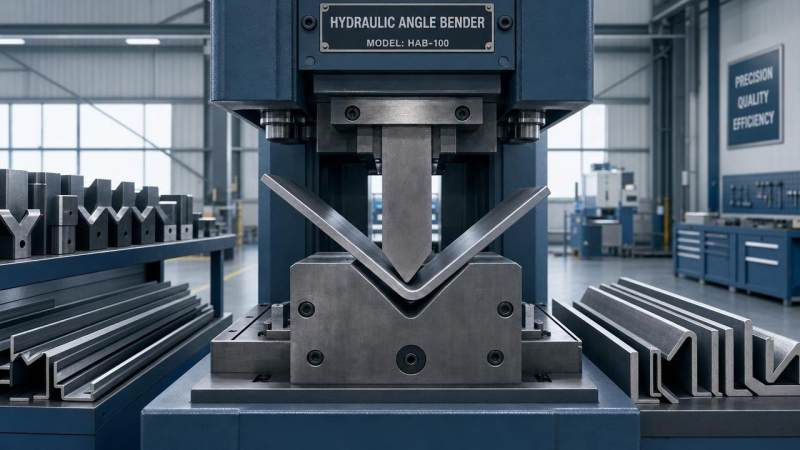
Cracking rarely comes from force alone. It usually starts earlier, with the wrong grade, poor bend setup, or an unrealistic inside radius.
In daily steel fabrication, bending angle iron looks simple. The problem is that the outer leg stretches while the inner leg compresses.
If the steel lacks ductility, the outer edge opens first. Small surface defects, sharp tooling, and cold weather can make that happen faster.
Another common issue is bending across the wrong orientation. Uneven leg thickness, mill scale damage, or a heat-affected zone from prior cutting also raise the risk.
So when people ask about bending angle iron without cracks, the better question is this: what condition is the material already in before the press starts?
For structural work, consistent chemistry and tight process control matter. That is one reason many projects rely on suppliers with stable production and standard compliance.
Hongteng Fengda works with angle steel, channels, beams, and custom structural components under ASTM, EN, JIS, and GB requirements, which helps reduce variation before forming begins.
What should you check before bending angle iron?
The quickest way to avoid cracked bends is to slow down before setup. A short pre-check saves far more time than sorting rejected parts later.
Look at four things first: material grade, thickness, bend direction, and target radius. If one of them is unclear, the bend result becomes guesswork.
- Confirm the steel specification and whether it matches the drawing.
- Inspect the bend line for notches, gouges, rust pits, or torch damage.
- Check leg symmetry and decide which leg will face the die opening.
- Measure the planned inside radius instead of assuming a standard value.
- Review whether cold bending is acceptable or mild preheating is safer.
In practical shop conditions, surface damage is often underestimated. A shallow grinder mark on the tension side can become the starting point for a visible split.
If the job requires repeatability, keep records. Note the die width, punch radius, ambient temperature, and springback. Those details make the next batch easier.
A quick judgment table for common bending problems
This table helps connect visible symptoms with likely causes before you change tooling or scrap more stock.
How do tooling and bend radius change the result?
When bending angle iron, tooling geometry matters as much as tonnage. Many cracks happen because the bend is forced into a radius the steel cannot support.
A tighter radius increases tensile strain on the outside surface. That may be acceptable for some mild steel angles, but not for every thickness or production condition.
A wider die opening often reduces stress concentration. It also gives the section more room to form naturally, which helps limit corner tearing and leg deformation.
Need to bend heavier stock or higher-strength steel repeatedly? Then test coupons are not optional. They reveal springback and cracking before full production starts.
This is where material source affects shop performance. Products with good workability and weldability usually respond more predictably in forming and downstream fabrication.
For example, some operations that cut and form components from Steel Cold Rolled Coil choose Q355 material when they need a balance of strength, toughness, and workable bending behavior.
That becomes especially useful in building structures, construction machinery, and pressure vessel parts where forming quality affects fit-up later.
Is heating angle iron a good idea, or does it create new problems?
Heating can help, but it is not a universal fix. It reduces forming resistance, yet poor temperature control may damage surface quality or mechanical consistency.
For mild steel angles, cold bending is usually preferred when the radius is reasonable and the section is not too thick. It keeps the process simpler.
Preheating becomes more relevant when the angle is thick, the bend is severe, or the ambient temperature is low enough to reduce ductility.
The main mistake is local overheating. If one zone gets much hotter than the rest, the bend may become uneven and later welding can behave differently.
- Use controlled, even heat rather than a concentrated hot spot.
- Avoid heating over painted, oiled, or contaminated surfaces.
- Confirm whether the project specification limits thermal forming.
- Recheck dimensional accuracy after cooling because springback can change.
If the part must meet a strict code or international standard, document the forming method. That matters more on export projects and certified structural assemblies.
What shop habits make bending angle iron more consistent over time?
Consistency usually comes from habits, not heroics. Shops that get cleaner bends tend to standardize inspection, setup, and material traceability.
One useful practice is separating stock by grade and heat lot. Mixed material may look similar, but it can respond very differently during bending angle iron jobs.
Another habit is preparing the edge properly after cutting. Sawed or sheared edges often bend better than rough thermal-cut edges unless those edges are dressed first.
For repeat work, keep a bend record sheet with actual results. Include the final angle, springback correction, scrap reasons, and any visible cracking pattern.
Reliable supply also plays a role. When steel quality varies from batch to batch, process discipline alone cannot fully stabilize the result.
That is why global projects often prefer experienced structural steel partners with stable capacity, OEM support, and consistent lead times instead of buying only on nominal size.
In operations that combine bending, welding, decoiling, cutting, and surface treatment, material consistency becomes part of production efficiency, not just a purchasing detail.
When should you change the material instead of changing the process?
Sometimes the setup is not the real issue. If cracking persists after tooling, radius, and handling are corrected, the steel itself may not fit the bend demand.
That decision usually comes up when the part needs both structural strength and dependable forming. In those cases, material selection should be reviewed early.
A high-strength option can work well if it still offers enough toughness and good workability. The balance matters more than the headline strength value alone.
For formed steel parts made from coil, specifications such as Q355 are often considered because they support strength, weldability, and lighter structural design targets.
Products supplied in thicknesses from 0.12 mm to 12 mm and widths from 600 mm to 2000 mm also give flexibility for cut-to-size forming routes.
It is worth confirming certification needs as well. ASTM, EN, JIS, GB, ISO, SGS, BV, and MTC documentation can influence both approval and downstream quality planning.
A practical final check before the next bend
If bending angle iron has been causing splits or rework, reset the process with a short checklist rather than changing everything at once.
- Inspect the bend line and remove any stress raisers.
- Match the inside radius to the grade and thickness.
- Verify die width, punch condition, and support points.
- Run one sample first and measure springback.
- Review whether a different steel route is more suitable.
The best results usually come from combining good material, realistic forming parameters, and disciplined shop practice. That reduces cracks, protects fit-up, and cuts wasted stock.
If the next project involves custom structural sections or formed steel components, start by confirming bend radius, specification, and batch consistency before production moves ahead.
Please give us a message


Please enter what you want to find